What's in it?
Search Entire CPID Database
Enter Products, Manufacturers, Chemicals, Product Categories and Product Types
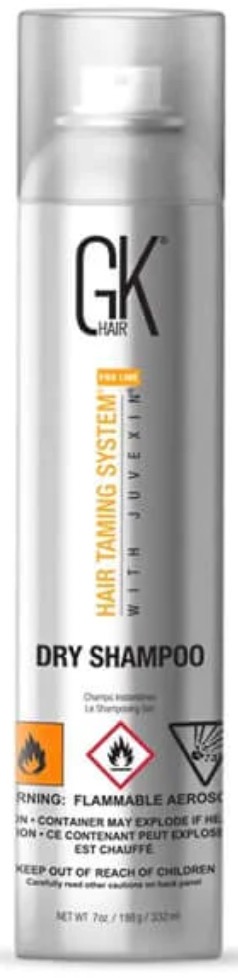 |
GK Hair, Pro Line, Hair Taming System with Juvexin, Dry Shampoo-01/03/2022
Products in this Consumer Product Information Database (CPID) are classified based on their composition:
Substances: single chemicals
Preparations: products which contain chemicals that can be easily separated during normal use
Articles: products or product assemblies that do not contain chemicals that can be separated out from the product or assembly under normal or advertised use.
Classification: Preparation
Indicates country where product is sold.
Market: US/CanadaPurpose of product.
Usage: Hair shampooStructure such as solid, liquid, aerosol etc.
Form: powderDate when validity of Material Safety Data Sheet (MSDS) or Safety Data Sheet (SDS) was last verified.
Date verified: April 23, 20253709 NE 5th. Avenue
Oakland Park FL 33334
-
Chemical Composition/Ingredients
The GHS is an acronym for The Globally Harmonized System of Classification and Labelling of Chemicals. The GHS is a system for standardizing and harmonizing the classification and labelling of chemicals. Chemicals are associated with codes that define their health, physical and environmental hazards.This universal hazard communication system was developed to ensure that employers, employees and consumers are provided with adequate, practical, reliable and comprehensible information on the hazards of chemicals, so that they can take effective preventive and protective measure for their own health and safety.
Advanced
The GHS classifications for chemicals associated with products in this database may be viewed by selecting the "Advanced" button on the Chemical Ingredients tables. Since this is a work in progress, GHS classifications may not be shown for all chemical ingredients.-
Primary Chemical Name is the standard name assigned to a chemical substance.
ChemicalChemical Abstracts Service Registry Number is a unique identifier for a chemical and its synonyms. CAS numbers identify the chemical, but not its concentration or specific mixture. CAS Registry Numbers are assigned by the Chemical Abstracts Service, a division of the American Chemical Society. For more information: www.cas.org
CAS No./ID
We have assigned "ID numbers" (with 6 leading zeros or nines, e.g., 000000-xx-x , 888888-xx-x) or 999999-xx-x) for blends and chemicals that do not have CAS numbers.Percent of chemical in preparation.
% Conc.Chemical of Concern (CoC)
Chemical of Concern(CoC)Silica, amorphous (Diatomaceous silica) 007631-86-9 <1 No Aluminum starch octenylsuccinate 009087-61-0 5.0-10.0 No Butane 000106-97-8 60.0-70.0 Yes  CoC List
Propane 000074-98-6 -- No Isobutane 000075-28-5 -- Yes CoC List
SD Alcohol 38B 000064-17-5 -- Yes CoC List
Starch 009005-25-8 -- Yes CoC List
Water 007732-18-5 -- No Cottonseed oil 008001-29-4 -- No Kaolin clay 001332-58-7 -- No Silica (unspecified) 999999-61-8 -- No Dimethicone 009006-65-9 -- No Diisopropyl adipate 006938-94-9 -- No Keratin, hydrolyzed 069430-36-0 -- No Oxidized Keratin 888888-12-0 -- No Keratin (JUVEXIN) 888888-12-1 -- No Grape leaf extract 084929-27-1 -- No Propylene glycol 000057-55-6 -- Yes CoC List
Fragrance(s)/perfume(s) 000000-00-1 -- No Benzyl Benzoate 000120-51-4 -- Yes CoC List
Benzyl Salicylate 000118-58-1 -- Yes CoC List
Citral 005392-40-5 -- Yes CoC List
Citronellol 000106-22-9 -- Yes CoC List
Coumarin 000091-64-5 -- Yes CoC List
Eugenol 000097-53-0 -- Yes CoC List
Farnesol 004602-84-0 -- Yes CoC List
Geraniol 000106-24-1 -- Yes CoC List
Isoeugenol 000097-54-1 -- Yes CoC List
d-Limonene 005989-27-5 -- Yes CoC List
Linalool 000078-70-6 -- Yes CoC List
Disteardimonium Hectorite 097280-96-1 -- No -
Health Effects Information
Ingredients and Health Effects Information are taken from the manufacturer's product label and/or the Safety Data Sheet (SDS). Products are not tested and manufacturer's information presented here is not evaluated by DeLima Associates.
View Safety Data Sheet(SDS) Date that the Safety Data Sheet (SDS) was issued by manufacturer of a specific product.
SDS DATE :January 03, 2022 -
Warnings
Hazard StatementsWarning. May intensify fire, oxidizer. Causes severe skin burns and eye damage. May cause respiratory irritation. May cause allergy or asthma symptoms or breathing difficulties if inhaled. May cause allergic skin reaction.Precautionary StatementsGeneralNone.PreventionKeep away from heat, hot surfaces, sparks, open flames and other ignition sources. No smoking. Keep/store away from clothing/combustible materials. Wash thoroughly after handling. Wear protective gloves/clothing/eye/face protection. In case of inadequate ventilation, wear respiratory protection.ResponseIf inhaled,move person outside for fresh air. Immediately call a poison centre/doctor/physician.In case of fire, extinguish or call the firefighter if the fire expands.StorageNone.DisposalNone. -
Acute health effects
From SDS:Hazards IdentificationEmergency OverviewWarning. May intensify fire, oxidizer. Causes severe skin burns and eye damage. May cause respiratory irritation. May cause allergy or asthma symptoms or breathing difficulties if inhaled. May cause allergic skin reaction.Potential Health EffectsEye Contact: May cause serious harm such as cornea opacity, iris lesions, irreversible eye coloration.Skin Contact: This product is corrosive and causes serious burns and vesicles on the skin, which can arise even after exposure. Burns are very stinging and painful. May cause frostbite.Inhalation: The vapors and/or powders may cause pulmonary edema, whose symptoms sometimes arise only after some hours.Ingestion: If swallowed, it may cause mouth, throat and esophagus burns, sickness, diarrhea, edema, larynx swelling and, consequently, asphyxia. Perforation of the gastro-intestinal tract is also possible. -
Chronic health effects
From SDS:
No information provided. -
Carcinogenicity
None in finished product. -
Handling information
Flammable avoid heat, sparks, flame or smoking during use. Use only in well ventilated areas, contents under pressure, do not crush, puncture or incinerate, keep out of the reach of children. Store as a level 3 Aerosol (NEPA30B). Store in a cool, dry and well-ventilated area. Store below 120F. Warehousing should be incompliance with local, state and federal codes as well as the regulations of your insurance carrier. -
Disposal information
Do not contaminate food of feed by storage or disposal. Do not reuse empty container. Wrap empty container and throw in trash collection. Dispose of according to Federal, State and Local Regulations regarding health, air and water pollution. -
First Aid
Eye Contact: Thorough rinsing with water for 15-20 mins is recommended. Seek medical assistance if irritation develops.Skin Contact: Discontinue the use of product. Apply cold compressions to affected area, which would help relieve any discomfort. If discomfort persists, contact a physician.Inhalation: If respiratory irritation occurs, move person outside for fresh air. Consult a physician if discomfort persists. Intentional misuse by deliberately concentrating and inhaling content can be harmful and fatal.Ingestion: Not a likely route.
-

 UN Global Harmonization Classification


