What's in it?
Search Entire CPID Database
Enter Products, Manufacturers, Chemicals, Product Categories and Product Types
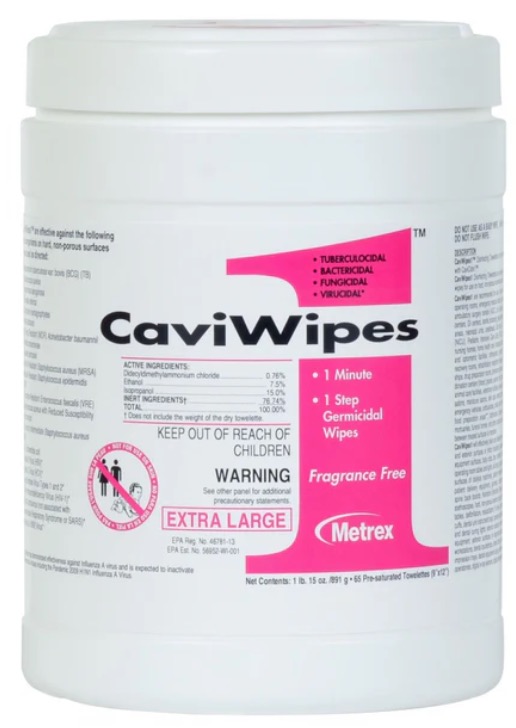 |
Metrex CaviWipes1, 13-5100, Professional Use-12/05/2025
Products in this Consumer Product Information Database (CPID) are classified based on their composition:
Substances: single chemicals
Preparations: products which contain chemicals that can be easily separated during normal use
Articles: products or product assemblies that do not contain chemicals that can be separated out from the product or assembly under normal or advertised use.
Classification: Preparation
Indicates country where product is sold.
Market: US/CanadaPurpose of product.
Usage: Surface sanitizerStructure such as solid, liquid, aerosol etc.
Form: wipesDate when validity of Material Safety Data Sheet (MSDS) or Safety Data Sheet (SDS) was last verified.
Date verified: April 24, 20251717 West Collins Avenue
Orange CA 92867
-
Chemical Composition/Ingredients
The GHS is an acronym for The Globally Harmonized System of Classification and Labelling of Chemicals. The GHS is a system for standardizing and harmonizing the classification and labelling of chemicals. Chemicals are associated with codes that define their health, physical and environmental hazards.This universal hazard communication system was developed to ensure that employers, employees and consumers are provided with adequate, practical, reliable and comprehensible information on the hazards of chemicals, so that they can take effective preventive and protective measure for their own health and safety.
Advanced
The GHS classifications for chemicals associated with products in this database may be viewed by selecting the "Advanced" button on the Chemical Ingredients tables. Since this is a work in progress, GHS classifications may not be shown for all chemical ingredients.-
Primary Chemical Name is the standard name assigned to a chemical substance.
ChemicalChemical Abstracts Service Registry Number is a unique identifier for a chemical and its synonyms. CAS numbers identify the chemical, but not its concentration or specific mixture. CAS Registry Numbers are assigned by the Chemical Abstracts Service, a division of the American Chemical Society. For more information: www.cas.org
CAS No./ID
We have assigned "ID numbers" (with 6 leading zeros or nines, e.g., 000000-xx-x , 888888-xx-x) or 999999-xx-x) for blends and chemicals that do not have CAS numbers.Percent of chemical in preparation.
% Conc.Purpose served by this chemical
FunctionChemical of Concern (CoC)
Chemical of Concern(CoC)Isopropanol 000067-63-0 15.0 Active Ingredient Yes  CoC List
SD Alcohol 38B 000064-17-5 7.5 Active Ingredient Yes CoC List
2-Butoxyethanol 000111-76-2 1.0-5.0 Solvent Yes CoC List
Didecyl dimethyl ammonium chloride 007173-51-5 0.76 Active Ingredient Yes CoC List
Water 007732-18-5 -- Solvent No Sodium laureth sulfate 009004-82-4 -- Cleaning Agent No Surfactant(s) (unspecified) 000000-00-4 -- Cleaning Agent No Sodium hydroxide 001310-73-2 -- pH Adjuster Yes CoC List
-
Health Effects Information
Ingredients and Health Effects Information are taken from the manufacturer's product label and/or the Safety Data Sheet (SDS). Products are not tested and manufacturer's information presented here is not evaluated by DeLima Associates.
View Safety Data Sheet(SDS) Date that the Safety Data Sheet (SDS) was issued by manufacturer of a specific product.
SDS DATE :December 05, 2025 Measure of Alkalinity/Acidity of substance or preparation where a level of 7 is considered as neutral.
pH Levels8.5-12.49 -
Warnings
Hazard StatementsWarning. Flammable liquid and vapor. Causes serious eye irritation. Harmful to aquatic life.Precautionary StatementsGeneralNone.PreventionKeep away from heat, hot surfaces, sparks, open flames and other ignition sources. No smoking. Keep container tightly closed. Ground/Bond container and receiving equipment. Use explosion-proof electrical, lighting, ventilating equipment. Use non-sparking tools. Take action to prevent static discharges. Wash hands thoroughly after handling. Avoid release to the environment. Wear eye protection.ResponseIF IN EYES: Rinse cautiously with water for several minutes. Remove contact lenses, if present and easy to do. Continue rinsing. If eye irritation persists: Get medical advice or attention.If on skin (or hair): Take off immediately all contaminated clothing. Rinse skin with water/shower.In case of fire: Use Dry chemical, CO2, or water spray or alcohol-resistant foam to extinguish.StorageStore in a well-ventilated place. Keep cool.DisposalDispose of contents and container to a hazardous or special waste collection point, in accordance with local, regional, national and/or international regulation. -
Acute health effects
From SDS:
Hazards Identification
Emergency Overview
Warning. Flammable liquid and vapor. Causes serious eye irritation. Harmful to aquatic life.
Potential Health Effects
Eye Contact: May cause moderate irritation, including burning sensation, tearing, redness or swelling.
Skin Contact: Repeated or prolonged skin contact may cause irritation. Repeated exposure may cause skin dryness or cracking.
Inhalation: At high concentrations, the vapors can be irritating to the respiratory system. High concentration of vapors may induce: headache, nausea, dizziness.
Ingestion: Ingestion is not considered a potential route of exposure. Not expected to present a significant ingestion hazard under anticipated conditions of normal use. -
Chronic health effects
From SDS:
Prolonged overexposure to ethylene glycol monobutyl ether may affect liver, kidneys, blood, lymphatic system or central nervous system. -
Carcinogenicity
Isopropanol, CAS No. 000067-63-0:IARC Group 3 - Not classifiable2-Butoxyethanol, CAS NO. 000111-76-2: IARC Group 3 - Not classifiableEthanol, CAS NO. 000064-17-5: IARC Group 1 - Carcinogenic to humans -
Handling information
Avoid contact with skin and eyes. Wear personal protective equipment. Avoid breathing vapors. Ensure adequate ventilation. Keep away from heat, hot surfaces, sparks, open flames and other ignition sources. No smoking. Refer to product label for additional information on use and handling. Do not eat, drink or smoke when using this product. Always wash hands after handling the product. Store in dry, well-ventilated area. Store at room temperature. Do not use or store near heat or open flame. Keep away from heat and direct sunlight. Do not contaminate water, food, or feed by storage or disposal. Protect container from physical damage. Keep containers closed when not in use to prevent moisture loss. Keep out of the reach of children.
-
Disposal information
Do not contaminate water, food, or feed by storage or disposal. Pesticide Disposal: To avoid wastes, use all material in this container by application to label directions. If wastes cannot be avoided, offer remaining product to waste disposal facility or pesticide disposal program. Do not reuse towelette.Towelette Disposal: Dispose of used towelette in trash after use. Do not re-use towelette. Do not flush in toilet. Non-Residential Use Sites: Container Handling: Nonrefillable container. Do not reuse or refill this container. Offer for recycling if available or dispose of in a sanitary landfill or by other procedures approved by state and local authorities, Container Handling: Refillable Container. Do not reuse or refill except as described in direction for use. Refill only with this product. Offer for recycling if available or dispose of in a sanitary landfill or by other procedures approved by state and local authorities. Residential Use Sites: Container Handling: Nonrefillable container. Do not reuse or refill this container. Wrap container and put in trash or offer for recycling if available, Container Handling: Refillable Container. Do not reuse or refill except as described in direction for use. Refill only with this product. Offer for recycling. lf recycling is not available, discard in trash. -
First Aid
Eye Contact: Hold eye open and rinse slowly and gently with water for 15-20 minutes. Remove contact lenses, if present, after the first 5 minutes, then continue rinsing eye. Call a poison control center or doctor for treatment advice.Skin Contact: Gently wash with plenty of soap and water. Seek medical attention if irritation develops.Inhalation: Move the affected person to fresh air. Get medical attention if symptoms occur.Ingestion: Ingestion is unlikely for solid products. No first aid is required for small amounts transferred from hands to mouth.
-

 UN Global Harmonization Classification


