What's in it?
Search Entire CPID Database
Enter Products, Manufacturers, Chemicals, Product Categories and Product Types
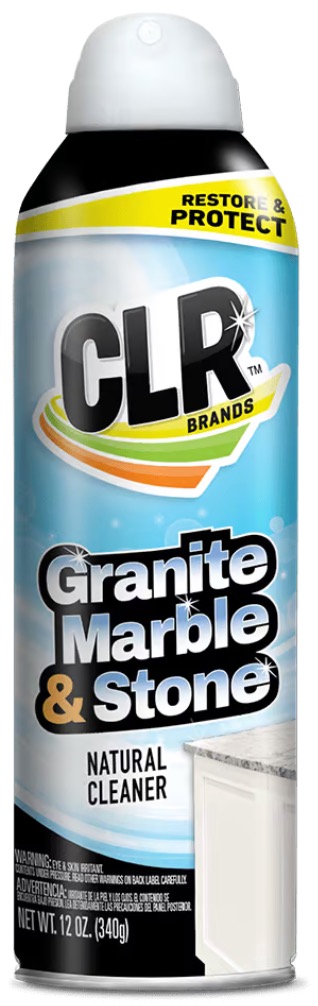 |
CLR Granite, Marble, and Stone Natural Cleaner, Aerosol-11/25/2024
Products in this Consumer Product Information Database (CPID) are classified based on their composition:
Substances: single chemicals
Preparations: products which contain chemicals that can be easily separated during normal use
Articles: products or product assemblies that do not contain chemicals that can be separated out from the product or assembly under normal or advertised use.
Classification: Preparation
Indicates country where product is sold.
Market: US/CanadaPurpose of product.
Usage: Granite, Marble, and Stone CleanerStructure such as solid, liquid, aerosol etc.
Form: aerosolDate when validity of Material Safety Data Sheet (MSDS) or Safety Data Sheet (SDS) was last verified.
Date verified: April 24, 20255550 W. Touhy Avenue, #200
Skokie IL 60077
-
Chemical Composition/Ingredients
The GHS is an acronym for The Globally Harmonized System of Classification and Labelling of Chemicals. The GHS is a system for standardizing and harmonizing the classification and labelling of chemicals. Chemicals are associated with codes that define their health, physical and environmental hazards.This universal hazard communication system was developed to ensure that employers, employees and consumers are provided with adequate, practical, reliable and comprehensible information on the hazards of chemicals, so that they can take effective preventive and protective measure for their own health and safety.
Advanced
The GHS classifications for chemicals associated with products in this database may be viewed by selecting the "Advanced" button on the Chemical Ingredients tables. Since this is a work in progress, GHS classifications may not be shown for all chemical ingredients.-
Primary Chemical Name is the standard name assigned to a chemical substance.
ChemicalChemical Abstracts Service Registry Number is a unique identifier for a chemical and its synonyms. CAS numbers identify the chemical, but not its concentration or specific mixture. CAS Registry Numbers are assigned by the Chemical Abstracts Service, a division of the American Chemical Society. For more information: www.cas.org
CAS No./ID
We have assigned "ID numbers" (with 6 leading zeros or nines, e.g., 000000-xx-x , 888888-xx-x) or 999999-xx-x) for blends and chemicals that do not have CAS numbers.Percent of chemical in preparation.
% Conc.Purpose served by this chemical
FunctionChemical of Concern (CoC)
Chemical of Concern(CoC)Butane 000106-97-8 3.0-7.0 Propellant Yes  CoC List
Propane 000074-98-6 1.0-5.0 Propellant No Sodium xylenesulfonate 001300-72-7 0.5-1.5 Surfactant No Sodium lauroyl sarcosinate 000137-16-6 0.1-1.0 Surfactant No Sodium metasilicate 006834-92-0 0.1-1.0 Corrosion Inhibitor No Alcohols, C12-14-secondary, ethoxylated 084133-50-6 0.1-1.0 Surfactant No Sodium nitrite 007632-00-0 0.1-1.0 Corrosion Inhibitor No Fragrance(s)/perfume(s) 000000-00-1 0.1-1.0 Withheld as CBI No Water 007732-18-5 -- Diluent No Glycols, polyethylene 025322-68-3 -- Surfactant No Alcohols, C12-14-secondary 126950-60-5 -- Surfactant No Myrcene 000123-35-3 -- Fragrance Yes CoC List
Isoeugenol 000097-54-1 -- Fragrance Yes CoC List
-
Health Effects Information
Ingredients and Health Effects Information are taken from the manufacturer's product label and/or the Safety Data Sheet (SDS). Products are not tested and manufacturer's information presented here is not evaluated by DeLima Associates.
View Safety Data Sheet(SDS) Date that the Safety Data Sheet (SDS) was issued by manufacturer of a specific product.
SDS DATE :November 25, 2024 -
Warnings
Hazard Statements
Warning. Pressurized container: may burst if heated. Causes skin irritation. Causes serious eye irritation. May cause an allergic skin reaction.
Precautionary Statements
General
None.
Prevention
Keep away from heat, hot surfaces, sparks, open flames and other ignition sources. No smoking. Do not pierce or burn, even after use. DO NOT get in eyes, on skin or clothing. Wear eye protection/face protection. Wear protective gloves. Wash skin thoroughly after handling. Contaminated work clothing must not be allowed out of the workplace. Take off contaminated clothing and wash it before reuse. Avoid breathing gas/mist/spray. Keep out of reach of children.
Response
IF IN EYES: Rinse cautiously with water for several minutes. Remove contact lenses, if present and easy to do. Continue rinsing. If eye irritation persists: Get medical advice.IF ON SKIN: Wash with plenty of soap and water. If skin irritation or rash occurs: Get medical advice/attention. Call a POISON CENTER or doctor/physician if you feel unwell.
Storage
None.
Disposal
None. -
Acute health effects
From SDS:
Hazards Identification
Emergency Overview
Warning. Pressurized container: may burst if heated. Causes skin irritation. Causes serious eye irritation. May cause an allergic skin reaction.
Potential Health Effects
Eye Contact: Causes serious eye irritation. Effects may vary depending on length of exposure and/or solution concentration.
Skin Contact: May cause an allergic skin reaction. Avoid prolonged skin contact. Effects may vary depending on length of exposure.
Inhalation: Product is not classified based on available data.
Ingestion: Product is not classified based on available data. -
Chronic health effects
From SDS:
No information.
-
Carcinogenicity
This product does not contain any substances at greater than 0.1% (w/w) that are considered carcinogenic by the National Toxicology Program (NTP) Report on Carcinogens and have not been found to be potential carcinogens in the International Agency for Research on Cancer (IARC) Monographs or found to be potential carcinogens by OSHA. -
Handling information
Keep away from heat, hot surfaces, sparks, open flames and other ignition sources. No smoking. Avoid contact with skin and eyes. Use appropriate personal protective equipment. Use with adequate ventilation. Avoid breathing gas/mist/spray. Observe good industrial hygiene practices when handling this material. Do not eat, drink, or smoke in work area. Wash hands thoroughly after use. Avoid exposure to excess heat. Keep out of reach of children. Store in cool, well-ventilated area, away from heat. Protect from sunlight. Do not expose to temperatures exceeding 122 ⁰F/50 ⁰C. This product should be stored away from sources of strong heat or strong oxidizing chemicals. Store in original container. Store in a secure area away from children and pets. -
Disposal information
Dispose of unused product in a permitted hazardous waste management facility following all local, state, and federal regulations. Processing use or contamination of this product may change the waste management options. It is the responsibility of the waste generator to determine the toxicity and physical properties of the material generated to determine the proper waste identification and disposal methods in compliance with applicable regulations. State and local disposal regulations may differ from federal disposal regulations. -
First Aid
Eye Contact: In case of eye contact, immediately rinse thoroughly with water for at least 15 minutes. Remove contact lenses, if present and easy to do. Continue rinsing. If eye irritation persists: Get medical advice.Skin Contact: In case of skin contact, rinse area for at least 15 minutes. Remove contaminated clothing and shoes, wash thoroughly before reuse. If irritation persists, get medical attention.Inhalation: Not a significant route of exposure. Remove to fresh air. If breathing is difficult, GET MEDICAL ATTENTION IMMEDIATELY.Ingestion: If swallowed, DO NOT induce vomiting, drink a glass of water followed with milk. Call POISON CENTER or doctor immediately. NEVER give an unconscious person anything to ingest.
-

 UN Global Harmonization Classification


