What's in it?
Search Entire CPID Database
Enter Products, Manufacturers, Chemicals, Product Categories and Product Types
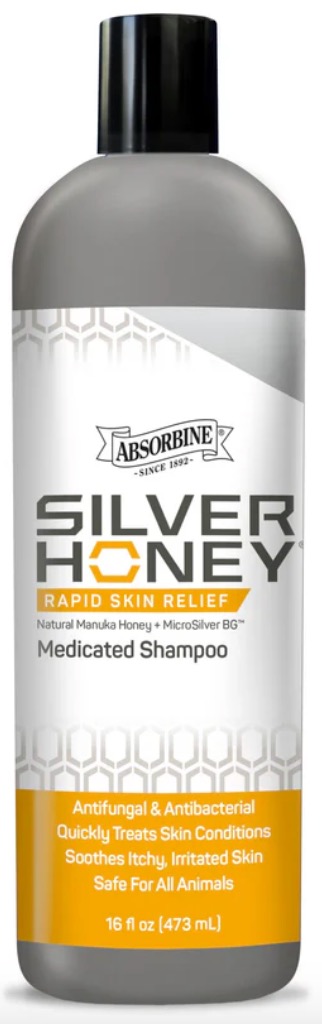 |
Absorbine Silver Honey Medicated Shampoo-01/19/2024
Products in this Consumer Product Information Database (CPID) are classified based on their composition:
Substances: single chemicals
Preparations: products which contain chemicals that can be easily separated during normal use
Articles: products or product assemblies that do not contain chemicals that can be separated out from the product or assembly under normal or advertised use.
Classification: Preparation
Indicates country where product is sold.
Market: US/CanadaPurpose of product.
Usage: Horse ShampooStructure such as solid, liquid, aerosol etc.
Form: liquidDate when validity of Material Safety Data Sheet (MSDS) or Safety Data Sheet (SDS) was last verified.
Date verified: April 22, 2025320 Benton Drive
East Longmeadow MA 01028
-
Chemical Composition/Ingredients
The GHS is an acronym for The Globally Harmonized System of Classification and Labelling of Chemicals. The GHS is a system for standardizing and harmonizing the classification and labelling of chemicals. Chemicals are associated with codes that define their health, physical and environmental hazards.This universal hazard communication system was developed to ensure that employers, employees and consumers are provided with adequate, practical, reliable and comprehensible information on the hazards of chemicals, so that they can take effective preventive and protective measure for their own health and safety.
Back
The GHS classifications for chemicals associated with products in this database may be viewed by selecting the "Advanced" button on the Chemical Ingredients tables. Since this is a work in progress, GHS classifications may not be shown for all chemical ingredients.-
Primary Chemical Name is the standard name assigned to a chemical substance.
ChemicalChemical Abstracts Service Registry Number is a unique identifier for a chemical and its synonyms. CAS numbers identify the chemical, but not its concentration or specific mixture. CAS Registry Numbers are assigned by the Chemical Abstracts Service, a division of the American Chemical Society. For more information: www.cas.org
CAS No./ID
We have assigned "ID numbers" (with 6 leading zeros or nines, e.g., 000000-xx-x , 888888-xx-x) or 999999-xx-x) for blends and chemicals that do not have CAS numbers.Is a seven-digit number (xxx-xxx-x) assigned by the European Commission to chemicals contained in three inventories:
EC No.
EINECS is the European Inventory of Existing Commercial Substances and its EINECS numbers are displayed as 2xx-xxx-x.
ELINCS is the European List of Notified Chemical Substances that was available after September 18, 1981 and its ELINCS numbers are displayed as 4xx-xxx-x.
NLP is the No-Longer Polymers category and its NLP numbers are displayed as 5xx-xxx-xPercent of chemical in preparation.
% Conc.California Prop.65 Chemical?The GHS is an acronym for The Globally Harmonized System of Classification and Labelling of Chemicals. The GHS is a system for standardizing and harmonizing the classification and labelling of chemicals. Chemicals are associated with codes that define their health, physical and environmental hazards.This universal hazard communication system was developed to ensure that employers, employees and consumers are provided with adequate, practical, reliable and comprehensible information on the hazards of chemicals, so that they can take effective preventive and protective measure for their own health and safety.
The GHS classifications for chemicals associated with products in this database may be viewed by selecting the "Advanced" button on the Chemical Ingredients tables. Since this is a work in progress, GHS classifications may not be shown for all chemical ingredients. UN Global Harmonization Classification
Hazard Codes and their associated descriptions are an essential part of the Globally Harmonized System of Classification and Labelling of Chemicals (GHS). There are 4 categories of Hazard Codes:
- Physical Hazard Codes (H200 series)
- Health Hazard Codes (H300 series)
- Environmental Hazard Codes (H400 series)
- Supplementary Hazard Codes (EUH series)
Hazard Codes may be found in the "Advanced" version of Chemical Composition / Ingredients tables.
Hazard Statement CodePrecautionary Codes and their associated descriptions are an essential part of the Globally Harmonized System of Classification and Labelling of Chemicals (GHS).
Precautionary Code
Precautionary Codes may be found in the "Advanced" version of Chemical Composition / Ingredients tables.PictogramSVHC is a substance (identified by the European Chemicals Agency) that may have serious and often irreversible effects on human health and the environment. SVHC are defined in Article 57 of Regulation (EC) No 1907/2006 (“the REACH Regulation”) and include substances which are:
SVHC?
1. Carcinogenic, Mutagenic or toxic to Reproduction (CMR), meeting the criteria for classification in category 1 or 2 in accordance with Directive 67/548/EEC or in category 1a or 1b in accordance with EC No 1272/2008This directive was recently replaced by the new EU regulation (EC) No 1272/2008.
2. Persistent, Bioaccumulative and Toxic (PBT) or very Persistent and very Bioaccumulative (vPvB) according to the criteria in Annex XIII of the REACH Regulation, or
3. Identified, on a case-by-case basis, from scientific evidence as causing probable serious effects to human health or the environment of an equivalent level of concern as those above (e.g. endocrine disrupters).Endocrine Disruptor (ED)Glycerin
000056-81-5
200-289-51.0-5.0 No -- -- -- No No Citric acid
000077-92-9
201-069-1-- No H319 P264, P280, P305, P351, P338, P337, P313 

No No Sodium chloride
007647-14-5
231-598-3-- No -- -- -- No No Cocoamidopropylbetaine
061789-40-0
263-058-81.0-5.0 No H315, H319, H317, H412 -- No No Potassium sorbate
024634-61-5
246-376-1-- No H319 P264, P280, P302+P352, P332+P313, P305+P351+P338, P337+P313 No No 2-Phenoxyethanol
000122-99-6
204-589-7-- No H302, H319 P264, P280, P330, P337+P313, P305, P351, P338 No No Sodium benzoate
000532-32-1
208-534-8-- No H319 P280, P305+P351+P338, P337+P313 No No Cocamidopropyl betaine
086438-79-1
---- No -- -- -- No No Honey
008028-66-8
---- No -- -- -- No No Disodium EDTA
000139-33-3
205-358-3-- No -- -- -- No No Sodium olefin sulfonate
068439-57-6
931-534-05.0-10.0 No H315, H318 P264, P280, P302+P352, P305+P351+P338, P362, P310 

No No Water
007732-18-5
231-791-2-- No -- -- -- No No Marigold extract
084776-23-8
283-949-5-- No H226 P241, P501, P403+P235, P370+P378, P303+P361+P353, P280, P242, P243, P240, P233, P210 
No No Methylisothiazoline
002682-20-4
220-239-6-- No H301, H311, H314, H330, H317, H410, EUH071 -- 

No No Cocamide MEA
068140-00-1
268-770-21.0-5.0 No -- -- -- No No Panthenol
000081-13-0
201-327-3-- No -- -- -- No No Silver
007440-22-4
231-131-3<0.1 No -- -- -- No No Neem oil
008002-65-1
---- No -- -- -- No No PEG-80 sorbitan laurate
009005-64-5
500-018-3-- No -- -- -- No No Ethylhexyl glycerin
070445-33-9
408-080-2-- No H412, H332, H318 P501, P273, P261, P271, P304+P340, P280, P305+P351+P338, P310 No No Hydroxypropyl Guar Hydroxypropyltrimonium Chloride
071329-50-5
--- No -- -- -- Yes No Zinc gluconate
004468-02-4
224-736-90.1-1.0 No H410, H400, H318 P310, P501, P391, P273, P305+P351+P338, P280 No No Polyacrylate Crosspolymer-6
1439374-06-7
---- No -- -- -- No No -
-
Hazard Statements
-
- Code
- Statement
- H226 : Flammable liquid and vapourH301 : Toxic if swallowedH302 : Harmful if swallowedH311 : Toxic in contact with skinH314 : Causes severe skin burns and eye damageH315 : Causes skin irritationH317 : May cause an allergic skin reactionH318 : Causes serious eye damageH319 : Causes serious eye irritationH330 : Fatal if inhaledH332 : Harmful if inhaledH400 : Very toxic to aquatic lifeH410 : Very toxic to aquatic life with long lasting effectsH412 : Harmful to aquatic life with long lasting effectsEUH071 : Corrosive to the respiratory tract
- P210 : Keep away from heat/sparks/open flames/hot surfacesP233 : Keep container tightly closedP240 : Ground/bond container and receiving equipmentP241 : Use explosion-proof electrical/ventilating/light/…/equipmentP242 : Use only non-sparking toolsP243 : Take precautionary measures against static dischargeP261 : Avoid breathing dust/fume/gas/mist/vapours/sprayP264 : Wash … thoroughly after handlingP271 : Use only outdoors or in a well-ventilated areaP273 : Avoid release to the environmentP280 : Wear protective gloves/protective clothing/eye protection/face protectionP305 : IF IN EYES:P310 : Immediately call a POISON CENTER or doctor/physicianP313 : Get medical advice/attentionP330 : Rinse mouthP337 : If eye irritation persists:P338 : Remove contact lenses if present and easy to do. continue rinsingP351 : Rinse continuously with water for several minutesP362 : Take off contaminated clothing and wash before reuseP391 : Collect spillageP302+P352 : IF ON SKIN: Wash with soap and waterP303+P361+P353 : IF ON SKIN (or hair): Remove/Take off immediately all contaminated clothing. Rinse skin with water/showerP304+P340 : IF INHALED: Remove victim to fresh air and keep at rest in a position comfortable for breathingP305+P351+P338 : IF IN EYES: Rinse continuously with water for several minutes. Remove contact lenses if present and easy to doP332+P313 : If skin irritation occurs: Get medical advice/attentionP337+P313 : Get medical advice/attentionP370+P378 : In case of fire: Use … for extinctionP501 : Dispose of contents/container to
- GHS02 : FlammableGHS05 : CorrosiveGHS06 : ToxicGHS07 : IrritantGHS09 : Environmentally Hazardous
-
-
Health Effects Information
Ingredients and Health Effects Information are taken from the manufacturer's product label and/or the Safety Data Sheet (SDS). Products are not tested and manufacturer's information presented here is not evaluated by DeLima Associates.
View Safety Data Sheet(SDS) Date that the Safety Data Sheet (SDS) was issued by manufacturer of a specific product.
SDS DATE :January 19, 2024 Measure of Alkalinity/Acidity of substance or preparation where a level of 7 is considered as neutral.
pH Levels5.5-7.5 -
SVHC declaration
Warning: This product contains Substances of Very High Concern (SVHC).
-
Warnings
Hazard Statements
Danger. Causes skin irritation. May cause an allergic skin reaction. Causes serious eye damage. Toxic to aquatic life with long lasting effects.
Precautionary Statements
General
None.
Prevention
Avoid breathing mist, spray. Wash hands thoroughly after handling. Contaminated work clothing must not be allowed out of the workplace. Avoid release to the environment. Wear eye protection, protective gloves.
Response
If in eyes: Rinse cautiously with water for several minutes. Remove contact lenses, if present and easy to do. Continue rinsing. Immediately call a POISON CENTER or doctor/physician.
If on skin: Wash with plenty of soap and water. If skin irritation or rash occurs: Get medical advice/attention. Take off contaminated clothing and wash it before reuse.
Collect spillage.
Storage
Store locked up
Disposal
Dispose of contents/container to hazardous or special waste collection point, in accordance with local, regional, national and/or international regulation. -
Acute health effects
From SDS:
Hazards Identification
Emergency Overview
Danger. Causes skin irritation. May cause an allergic skin reaction. Causes serious eye damage. Toxic to aquatic life with long lasting effects.
Potential Health Effects
Eye Contact: Causes serious eye damage.
Skin Contact: Causes skin irritation. May cause an allergic skin reaction.
Inhalation: No information.
Ingestion: Ingestion may cause nausea, vomiting and diarrhea. -
Chronic health effects
From SDS:
None. -
Carcinogenicity
Not classified. -
Handling information
Avoid contact with skin and eyes. Wear personal protective equipment. Avoid breathing mist, vapors. Ensure good ventilation of the work station. Do not eat, drink or smoke when using this product. Always wash hands after handling the product. Wash contaminated clothing before reuse. Contaminated work clothing should not be allowed out of the workplace. Store in dry, cool, well-ventilated area. Protect from physical damage. Keep container closed when not in use.
-
Disposal information
Dispose in a safe manner in accordance with local/national regulations.
-
California Prop. 65 Warning
This product does not contain any substances known to the state of California to cause cancer, developmental and/or reproductive harm
-
First Aid
Eye Contact: Rinse cautiously with water for several minutes. Remove contact lenses, if present and easy to do. Continue rinsing. Call a physician immediately.Skin Contact: Wash with plenty of soap and water. If skin irritation or rash occurs: Get medical advice/attention. Take off contaminated clothing and wash it before reuse.Inhalation: Remove person to fresh air and keep comfortable for breathing.Ingestion: Call a poison center or a doctor if you feel unwell.
-
-
