What's in it?
Search Entire CPID Database
Enter Products, Manufacturers, Chemicals, Product Categories and Product Types
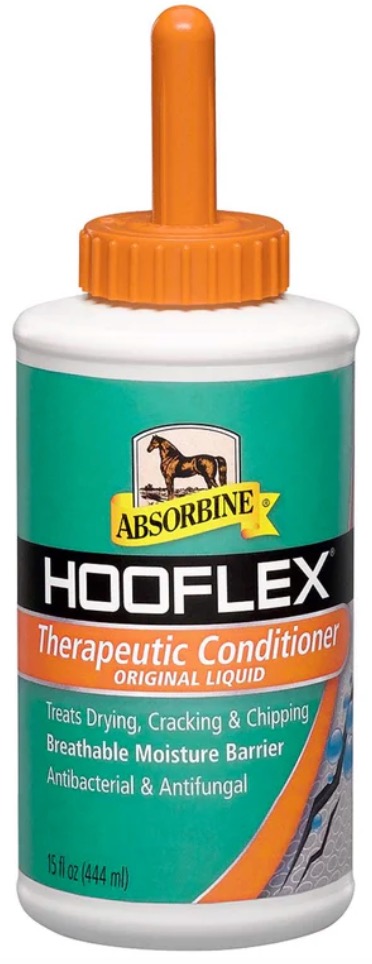 |
Absorbine Hooflex Therapeutic Conditioner Liquid-10/29/2021
Products in this Consumer Product Information Database (CPID) are classified based on their composition:
Substances: single chemicals
Preparations: products which contain chemicals that can be easily separated during normal use
Articles: products or product assemblies that do not contain chemicals that can be separated out from the product or assembly under normal or advertised use.
Classification: Preparation
Indicates country where product is sold.
Market: US/CanadaPurpose of product.
Usage: Horse hoof moisturizerStructure such as solid, liquid, aerosol etc.
Form: liquidDate when validity of Material Safety Data Sheet (MSDS) or Safety Data Sheet (SDS) was last verified.
Date verified: April 22, 2025320 Benton Drive
East Longmeadow MA 01028
-
Chemical Composition/Ingredients
The GHS is an acronym for The Globally Harmonized System of Classification and Labelling of Chemicals. The GHS is a system for standardizing and harmonizing the classification and labelling of chemicals. Chemicals are associated with codes that define their health, physical and environmental hazards.This universal hazard communication system was developed to ensure that employers, employees and consumers are provided with adequate, practical, reliable and comprehensible information on the hazards of chemicals, so that they can take effective preventive and protective measure for their own health and safety.
Advanced
The GHS classifications for chemicals associated with products in this database may be viewed by selecting the "Advanced" button on the Chemical Ingredients tables. Since this is a work in progress, GHS classifications may not be shown for all chemical ingredients.-
Primary Chemical Name is the standard name assigned to a chemical substance.
ChemicalChemical Abstracts Service Registry Number is a unique identifier for a chemical and its synonyms. CAS numbers identify the chemical, but not its concentration or specific mixture. CAS Registry Numbers are assigned by the Chemical Abstracts Service, a division of the American Chemical Society. For more information: www.cas.org
CAS No./ID
We have assigned "ID numbers" (with 6 leading zeros or nines, e.g., 000000-xx-x , 888888-xx-x) or 999999-xx-x) for blends and chemicals that do not have CAS numbers.Percent of chemical in preparation.
% Conc.Chemical of Concern (CoC)
Chemical of Concern(CoC)Paraffin oil 008012-95-1 30.0-40.0 Yes  CoC List
Turpentine 008006-64-2 5.0-8.0 Yes CoC List
Pinus Palustris Wood Tar 008011-48-1 2.0-5.0 No 4-Chloro-3,5-xylenol 000088-04-0 1.0-3.0 No Rosin 008050-09-7 1.0-3.0 Yes CoC List
Lanolin 008006-54-0 -- No Mineral oil, white 008042-47-5 -- No Neatsfoot oil 008002-64-0 -- No Paraffin 008002-74-2 -- No Petrolatum 008009-03-8 -- No Tallow 061789-97-7 -- No -
Health Effects Information
Ingredients and Health Effects Information are taken from the manufacturer's product label and/or the Safety Data Sheet (SDS). Products are not tested and manufacturer's information presented here is not evaluated by DeLima Associates.
View Safety Data Sheet(SDS) Date that the Safety Data Sheet (SDS) was issued by manufacturer of a specific product.
SDS DATE :October 29, 2021 Health Flammability Reactivity HMIS is the Hazardous Materials Identification System developed by the American Coatings Association and indicates the levels (“1” to “4”) of Health Hazard, Flammability Hazard and Physical Hazard associated with a specific product.
HMIS RATING2 0 0 -
Warnings
Hazard Statements
Warning. Causes skin irritation. Causes serious eye irritation. May cause an allergic skin reaction. May cause respiratory irritation.
Precautionary Statements
General
None.
Prevention
Avoid breathing dust/fume/gas/mist/vapours/spray. Wash thoroughly after handling. Contaminated work clothing should not be allowed out of the workplace. Use only outdoors or in a well-ventilated area. Wear protective gloves/protective clothing/eye protection/face protection
Response
IF ON SKIN: Wash with plenty of water. If skin irritation or rash occurs: Get medical advice/attention. Take off contaminated clothing and wash it before reuse.
IF IN EYES: Rinse cautiously with water for several minutes. Remove contact lenses, if present and easy to do. Continue rinsing. If eye irritation persists: Get medical advice/attention.
IF INHALED: Remove person to fresh air and keep comfortable for breathing. Call a POISON CENTER/doctor if you feel unwell.
Storage
Store in well-ventilated place. Keep container tightly closed. Store locked up.
Disposal
Dispose of contents/container in accordance with local/regional/national/international regulations -
Acute health effects
From SDS:
Hazards Identification
Emergency Overview
Warning. Causes skin irritation. Causes serious eye irritation. May cause an allergic skin reaction. May cause respiratory irritation.
Potential Health Effects
Eye Contact: Causes skin irritation.
Skin Contact: Causes skin irritation.
Inhalation: May cause respiratory irritation.
Ingestion: Specific test data for the substance or mixture is not available. Ingestion may cause irritation to mucous membranes. Ingestion may cause irritation. -
Chronic health effects
From SDS:
Not known. -
Carcinogenicity
Ingredients within this product are not found on one or more of the following lists: FEDERAL OSHA Z LIST, NTP, IARC, or CAL/OSHA and therefore are not considered to be cancer-causing agents by these agencies. -
Handling information
To prevent eye contact under the foreseeable conditions of use, wear appropriate safety eyewear. When handling, do not eat, drink, or smoke. Wash thoroughly after handling. Do not handle or store near heat, sparks, or flame. Keep away from incompatible materials. Keep container closed when not in use and store in well ventilated area.
-
Disposal information
Waste disposal must be in accordance with appropriate U.S. Federal, State, and local regulations, those of Australia, EU Member States and Japan.
-
California Prop. 65 Warning
This product does not contain ingredients on the Proposition 65 Lists.
-
First Aid
Eye Contact: If product enters the eyes, flush with plenty of water or eye wash solution for several minutes. Remove contacts if present and easy to do. Seek medical attention if irritation persists.Skin Contact: Wash skin thoroughly with soap and water after handling. Seek medical attention if irritation develops and persists.Inhalation: If breathing becomes difficult, remove victim to fresh air. If necessary, use artificial respiration to support vital functions. Seek medical attention.Ingestion: If product is swallowed, call physician or poison center immediately. If professional advice is not available, do not induce vomiting. Never induce vomiting or give diluents (milk or water) to someone who is unconscious, having convulsions, or who cannot swallow. Seek medical advice. Take a copy of the label and/or SDS with the victim to the health professional.
-

 UN Global Harmonization Classification


