What's in it?
Search Entire CPID Database
Enter Products, Manufacturers, Chemicals, Product Categories and Product Types
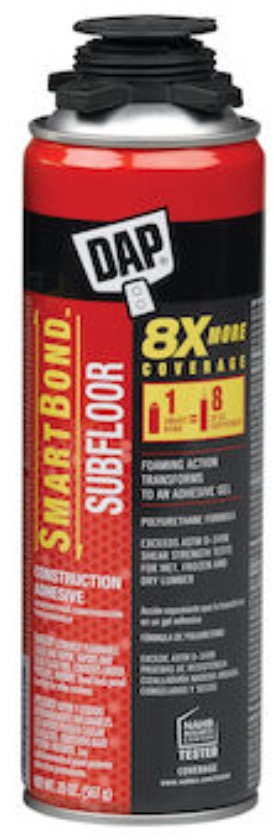 |
DAP SMARTBOND Subfloor Construction Adhesive, Aerosol-9/2/2022
Products in this Consumer Product Information Database (CPID) are classified based on their composition:
Substances: single chemicals
Preparations: products which contain chemicals that can be easily separated during normal use
Articles: products or product assemblies that do not contain chemicals that can be separated out from the product or assembly under normal or advertised use.
Classification: Preparation
Indicates country where product is sold.
Market: US/CanadaPurpose of product.
Usage: Construction adhesiveStructure such as solid, liquid, aerosol etc.
Form: aerosolDate when validity of Material Safety Data Sheet (MSDS) or Safety Data Sheet (SDS) was last verified.
Date verified: April 26, 20252400 Boston Street, #200
Baltimore MD 21224
-
Chemical Composition/Ingredients
The GHS is an acronym for The Globally Harmonized System of Classification and Labelling of Chemicals. The GHS is a system for standardizing and harmonizing the classification and labelling of chemicals. Chemicals are associated with codes that define their health, physical and environmental hazards.This universal hazard communication system was developed to ensure that employers, employees and consumers are provided with adequate, practical, reliable and comprehensible information on the hazards of chemicals, so that they can take effective preventive and protective measure for their own health and safety.
Advanced
The GHS classifications for chemicals associated with products in this database may be viewed by selecting the "Advanced" button on the Chemical Ingredients tables. Since this is a work in progress, GHS classifications may not be shown for all chemical ingredients.-
-
Health Effects Information
Ingredients and Health Effects Information are taken from the manufacturer's product label and/or the Safety Data Sheet (SDS). Products are not tested and manufacturer's information presented here is not evaluated by DeLima Associates.
View Safety Data Sheet(SDS) Date that the Safety Data Sheet (SDS) was issued by manufacturer of a specific product.
SDS DATE :September 02, 2022 Health Flammability Reactivity HMIS is the Hazardous Materials Identification System developed by the American Coatings Association and indicates the levels (“1” to “4”) of Health Hazard, Flammability Hazard and Physical Hazard associated with a specific product.
HMIS RATING2* 4 0 -
V.O.C Information
Volatile Organic Compounds g/L Without Solvent : 152.4
-
Warnings
Hazard Statements
Danger. Extremely flammable aerosol. Contains gas under pressure; may explode if heated. Harmful if inhaled.
General
None.
Prevention
Keep away from heat, hot surfaces, sparks, open flam es and other ignition sources. No smoking. Do not spray on an open flam e or other ignition source. Do not pierce or burn, even after use. Avoid breathing dust/fume/gas/mist/vapours/spray. Use only outdoors or in a well-ventilated area.
Response
IF INHALED: Remove person to fresh air and keep comfortable for breathing. Call a POISON CENTER or doctor/physician if you feel unwell.
Storage
Protect from sunlight. Store in a well-ventilated place. Do no expose to temperatures exceeding 50°C/ 122°F..
Disposal
None. -
Acute health effects
From SDS:
Hazards Identification
Emergency Overview
Danger. Extremely flammable aerosol. Contains gas under pressure; may explode if heated. Harmful if inhaled.
Potential Health Effects
Eye Contact: Direct eye contact may cause irritation. Mist and vapors may cause eye irritation. Foam contact can cause physical damage due to adhesive character.
Skin Contact: May cause sensitization by skin contact. May cause localized irritation, reddening or swelling. Prolonged or repeated exposure m ay lead to sensitization and/or contact derm atitis. This product has strong adhesive-like characteristics and will adhere aggressively to skin and other surfaces.
Inhalation: Vapors may be irritating to eyes, nose, throat, and lungs. Inhalation of high concentrations may cause headache, nausea, and dizziness.
Ingestion: Ingestion may cause gastrointestinal irritation, nausea, vomiting and diarrhea. -
Chronic health effects
From SDS:
Repeated or prolonged exposure may cause respiratory system damage. Repeated contact may cause allergic reactions in very susceptible persons. -
Carcinogenicity
Limited evidence in experimental animals. -
Handling information
KEEP OUT OF REACH OF CHILDREN! DO NOT TAKE INTERNALLY. Remove all sources of ignition. Make sure nozzle is directed away from yourself prior to discharge. Keep away from open flames, hot surfaces and sources of ignition. Avoid heat, sparks and open flames. Wear appropriate personal protection. Avoid breathing vapor and contact with eyes, skin and clothing. Use only with adequate ventilation. Ensure fresh air entry during application and drying. Empty containers retain product residue (liquid and/or vapor). Vapor can ignite potentially causing an explosion. Wash thoroughly after handling. Contains isocyanates. See inform ation supplied by the m anufacturer. Persons allergic to isocyanates, and particularly those suffering from asthm a or other respiratory conditions, should not work with isocyanates. Store away from sources of ignition and heat. Protect material from direct sunlight. Keep containers tightly closed in a dry, cool and well-ventilated place. Do not store at tem peratures above 120 °F (49 °C). Store containers away from excessive heat and freezing. Store away from caustics and oxidizers. -
Disposal information
Residues and spilled material are hazardous waste due to ignitability. Contents under pressure. Dispose of material in accordance with all federal, state and local regulations. State and Local regulations/restrictions are complex and m ay differ from Federal regulations. Responsibility for proper waste disposal is with the owner of the waste. Liquids cannot be disposed of in a landfill. Do not flush into surface water or sanitary sewer system. Do not empty into drains. Do not re-use empty containers. The container for this product can present explosion or fire hazards, even when emptied. To avoid risk of injury, do not cut, puncture, or weld on or near this container. Before disposing of containers, relieve container of any rem aining product and pressure. Em pty cylinders, once relieved of all pressure, can be disposed of as non-hazardous waste. NOTE: Review fire hazards before proceeding with clean up. Im m ediately elim inate sources of ignition. Keep people away from and upwind of spill/leak. Contain spilled m aterial and remove with inert absorbent. Dispose of contaminated absorbent, container and unused contents in accordance with local, state and federal regulations. Prevent product from entering drains. Soak up with inert absorbent material and dispose of as hazardous waste. Use personal protective equipment as necessary. Read all product instructions before using. Personal protective equipment should include impervious gloves, protective eye wear, and suitable work clothes. Scrape up dried material and place into containers. Uncured product is very sticky, so carefully rem ove the bulk of the foam by scraping it up and then im m ediately rem ove residue with a rag and solvent such as polyurethane cleaner, mineral spirits, acetone (nail polish remover), paint thinner, etc. Once the product has cured, it can only be rem oved physically by scraping, buffing, etc. Dispose as plastic waste (foam plastic) in accordance with all applicable guidelines and regulations.
-
First Aid
Eye Contact: In case of contact, immediately flush eyes with large quantities of water for at least 15 minutes until irritation subsides. Get medical attention immediately.Skin Contact: Wash skin with soap and water for 15 minutes. Get medical aid if symptoms persist. Use a rag to remove excess foam from skin and remove contaminated clothing. Use of a solvent, such as acetone (nail polish remover) or mineral spirits, m ay help in rem oving uncured foam residue from clothing or other surfaces (avoid eye contact). Cured foam m ay be physically rem oved by persistent washing with soap and water. If irritation develops, use m ild skin cream . If irritation persists, obtain medical attention.Inhalation: If you experience difficulty in breathing, leave the area to obtain fresh air. If continued difficulty is experienced, get medical attention immediately.If swallowed, DO NOT INDUCE VOMITING. Get medical attention immediately.
-
 CoC List
 UN Global Harmonization Classification


