What's in it?
Search Entire CPID Database
Enter Products, Manufacturers, Chemicals, Product Categories and Product Types
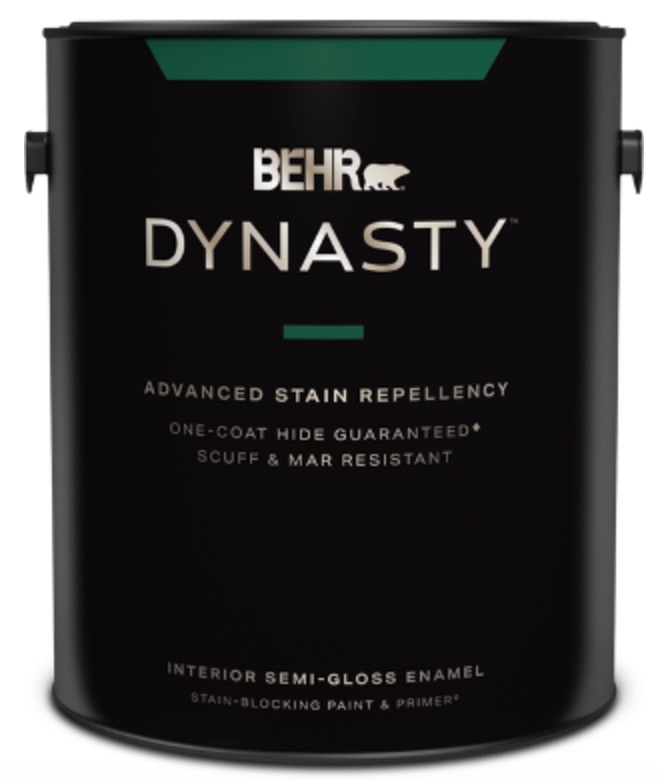 |
Behr Dynasty Interior Semi-Gloss Enamel, Medium Base, 3654-05/17/2022
Products in this Consumer Product Information Database (CPID) are classified based on their composition:
Substances: single chemicals
Preparations: products which contain chemicals that can be easily separated during normal use
Articles: products or product assemblies that do not contain chemicals that can be separated out from the product or assembly under normal or advertised use.
Classification: Preparation
Indicates country where product is sold.
Market: US/CanadaPurpose of product.
Usage: Interior Latex PaintStructure such as solid, liquid, aerosol etc.
Form: liquidDate when validity of Material Safety Data Sheet (MSDS) or Safety Data Sheet (SDS) was last verified.
Date verified: April 26, 20251801 East St. Andrew Place
Santa Ana CA 92705
-
Chemical Composition/Ingredients
The GHS is an acronym for The Globally Harmonized System of Classification and Labelling of Chemicals. The GHS is a system for standardizing and harmonizing the classification and labelling of chemicals. Chemicals are associated with codes that define their health, physical and environmental hazards.This universal hazard communication system was developed to ensure that employers, employees and consumers are provided with adequate, practical, reliable and comprehensible information on the hazards of chemicals, so that they can take effective preventive and protective measure for their own health and safety.
Back
The GHS classifications for chemicals associated with products in this database may be viewed by selecting the "Advanced" button on the Chemical Ingredients tables. Since this is a work in progress, GHS classifications may not be shown for all chemical ingredients.-
Primary Chemical Name is the standard name assigned to a chemical substance.
ChemicalChemical Abstracts Service Registry Number is a unique identifier for a chemical and its synonyms. CAS numbers identify the chemical, but not its concentration or specific mixture. CAS Registry Numbers are assigned by the Chemical Abstracts Service, a division of the American Chemical Society. For more information: www.cas.org
CAS No./ID
We have assigned "ID numbers" (with 6 leading zeros or nines, e.g., 000000-xx-x , 888888-xx-x) or 999999-xx-x) for blends and chemicals that do not have CAS numbers.Is a seven-digit number (xxx-xxx-x) assigned by the European Commission to chemicals contained in three inventories:
EC No.
EINECS is the European Inventory of Existing Commercial Substances and its EINECS numbers are displayed as 2xx-xxx-x.
ELINCS is the European List of Notified Chemical Substances that was available after September 18, 1981 and its ELINCS numbers are displayed as 4xx-xxx-x.
NLP is the No-Longer Polymers category and its NLP numbers are displayed as 5xx-xxx-xPercent of chemical in preparation.
% Conc.California Prop.65 Chemical?The GHS is an acronym for The Globally Harmonized System of Classification and Labelling of Chemicals. The GHS is a system for standardizing and harmonizing the classification and labelling of chemicals. Chemicals are associated with codes that define their health, physical and environmental hazards.This universal hazard communication system was developed to ensure that employers, employees and consumers are provided with adequate, practical, reliable and comprehensible information on the hazards of chemicals, so that they can take effective preventive and protective measure for their own health and safety.
The GHS classifications for chemicals associated with products in this database may be viewed by selecting the "Advanced" button on the Chemical Ingredients tables. Since this is a work in progress, GHS classifications may not be shown for all chemical ingredients. UN Global Harmonization Classification
Hazard Codes and their associated descriptions are an essential part of the Globally Harmonized System of Classification and Labelling of Chemicals (GHS). There are 4 categories of Hazard Codes:
- Physical Hazard Codes (H200 series)
- Health Hazard Codes (H300 series)
- Environmental Hazard Codes (H400 series)
- Supplementary Hazard Codes (EUH series)
Hazard Codes may be found in the "Advanced" version of Chemical Composition / Ingredients tables.
Hazard Statement CodePrecautionary Codes and their associated descriptions are an essential part of the Globally Harmonized System of Classification and Labelling of Chemicals (GHS).
Precautionary Code
Precautionary Codes may be found in the "Advanced" version of Chemical Composition / Ingredients tables.PictogramSVHC is a substance (identified by the European Chemicals Agency) that may have serious and often irreversible effects on human health and the environment. SVHC are defined in Article 57 of Regulation (EC) No 1907/2006 (“the REACH Regulation”) and include substances which are:
SVHC?
1. Carcinogenic, Mutagenic or toxic to Reproduction (CMR), meeting the criteria for classification in category 1 or 2 in accordance with Directive 67/548/EEC or in category 1a or 1b in accordance with EC No 1272/2008This directive was recently replaced by the new EU regulation (EC) No 1272/2008.
2. Persistent, Bioaccumulative and Toxic (PBT) or very Persistent and very Bioaccumulative (vPvB) according to the criteria in Annex XIII of the REACH Regulation, or
3. Identified, on a case-by-case basis, from scientific evidence as causing probable serious effects to human health or the environment of an equivalent level of concern as those above (e.g. endocrine disrupters).Endocrine Disruptor (ED)Methylisothiazoline
002682-20-4
220-239-60-0.1 No H301, H311, H314, H330, H317, H410, EUH071 -- 


No No 3-(2-Aminoethylamino)propyldimethoxymethylsilane
003069-29-2
221-336-60.1-1.0 No -- -- -- No No Mica
012001-26-2
-1.0-5.0 No -- -- -- Yes No Titanium dioxide
013463-67-7
236-675-510.0-30.0 No -- -- -- No No Quartz
014808-60-7
238-878-40.1-1.0 No -- -- -- No No Methylchloroisothiazoline
026172-55-4
247-500-70-0.1 No -- -- -- No No -
-
Hazard Statements
-
- Code
- Statement
- H301 : Toxic if swallowedH311 : Toxic in contact with skinH314 : Causes severe skin burns and eye damageH317 : May cause an allergic skin reactionH330 : Fatal if inhaledH410 : Very toxic to aquatic life with long lasting effectsEUH071 : Corrosive to the respiratory tract
- GHS05 : CorrosiveGHS06 : ToxicGHS09 : Environmentally Hazardous
-
-
Health Effects Information
Ingredients and Health Effects Information are taken from the manufacturer's product label and/or the Safety Data Sheet (SDS). Products are not tested and manufacturer's information presented here is not evaluated by DeLima Associates.
View Safety Data Sheet(SDS) Date that the Safety Data Sheet (SDS) was issued by manufacturer of a specific product.
SDS DATE :May 17, 2022 Health Flammability Reactivity HMIS is the Hazardous Materials Identification System developed by the American Coatings Association and indicates the levels (“1” to “4”) of Health Hazard, Flammability Hazard and Physical Hazard associated with a specific product.
HMIS RATING2 0 0 Measure of Alkalinity/Acidity of substance or preparation where a level of 7 is considered as neutral.
pH Levels7.0-10.0 -
SVHC declaration
Warning: This product contains Substances of Very High Concern (SVHC).
-
Warnings
Hazard Statements
Warning. May cause an allergic skin reaction.
Precautionary Statements
General
None.
Prevention
Avoid breathing mist/vapors. Contaminated work clothing must not be allowed out of the workplace. Wear protective gloves.
Response
If on skin: Wash with plenty of water. If skin irritation or rash occurs: Get medical advice/attention. Wash contaminated clothing before reuse.
Storage
Store away from incompatible materials.
Disposal
Dispose of contents/container in accordance with local/regional/national/international regulations. -
Acute health effects
From SDS:
Hazards Identification
Emergency Overview
Warning. May cause an allergic skin reaction.
Potential Health Effects
Eye Contact: Direct contact with eyes may cause temporary irritation.
Skin Contact: May cause an allergic skin reaction.
Inhalation: Prolonged inhalation may be harmful.
Ingestion: May cause discomfort if swallowed. -
Chronic health effects
From SDS:
Prolonged inhalation may be harmful. -
Carcinogenicity
Inhalation of titanium dioxide dust may cause cancer, however due to the physical form of the product, inhalation of dust is not likely.IARC Monographs. Overall Evaluation of CarcinogenicitySilica gel, precipitated, crystalline-free CAS No. 112926-00-8, Group 3Titanium dioxide CAS 013463-67-7, Group 2BQuartz (SiO2, CAS No. 014808-60-7, Group 1NTP Report on CarcinogensQuartz (SiO2) CAS No. 014808-60-7, Carcinogenic to humans.OSHA Specifically Regulated Substances (29 CFR 1910.1001-1053)Quartz (SiO2), CAS No. 014808-60-7, Cancer -
Handling information
Avoid breathing mist/vapors. Avoid contact with eyes, skin, and clothing. Avoid prolonged exposure. Provide adequate ventilation. Wear appropriate personal protective equipment. Observe good industrial hygiene practices.Store in tightly closed container. Store away from incompatible materials. -
Disposal information
Collect and reclaim or dispose in sealed containers at licensed waste disposal site. Incinerate the material under controlled conditions in an approved incinerator. Dispose of contents/container in accordance with local/regional/national/international regulations.
-
First Aid
Eye Contact: Rinse with water. Get medical attention if irritation develops and persists.Skin Contact: Remove contaminated clothing immediately and wash skin with soap and water. In case of eczema or other skin disorders: Seek medical attention and take along these instructions.Inhalation: Move to fresh air. Call a physician if symptoms develop or persist.Ingestion: Rinse mouth. Get medical attention if symptoms occur.
-
-
