What's in it?
Search Entire CPID Database
Enter Products, Manufacturers, Chemicals, Product Categories and Product Types
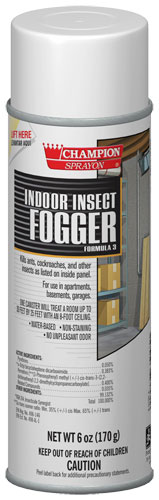 |
Kill Zone Ant & Roach Killer, Formula 3, 4192175, Aerosol-08/13/2013
Products in this Consumer Product Information Database (CPID) are classified based on their composition:
Substances: single chemicals
Preparations: products which contain chemicals that can be easily separated during normal use
Articles: products or product assemblies that do not contain chemicals that can be separated out from the product or assembly under normal or advertised use.
Classification: Preparation
Indicates country where product is sold.
Market: US/CanadaKill Zone Ant and Roach Killer kills on contact. It combines effective knockdown with residual power for 2 to 4 weeks. Indoors, it kills and controls ants, brown dog ticks, carpet beetles, centipedes, cockroaches, crickets, earwigs, firebrats, silverfish, sow bugs and spiders. It also controls fleas and ticks found where pets rest (their beds, as an example). Use in nonfood areas, indoors in homes, apartments, campers and mobile homes
Purpose of product.
Usage: Ant and cockroach killerStructure such as solid, liquid, aerosol etc.
Form: aerosolDate when validity of Material Safety Data Sheet (MSDS) or Safety Data Sheet (SDS) was last verified.
Date verified: April 26, 20252727 Gardner Road
Broadview IL 60155
-
Chemical Composition/Ingredients
The GHS is an acronym for The Globally Harmonized System of Classification and Labelling of Chemicals. The GHS is a system for standardizing and harmonizing the classification and labelling of chemicals. Chemicals are associated with codes that define their health, physical and environmental hazards.This universal hazard communication system was developed to ensure that employers, employees and consumers are provided with adequate, practical, reliable and comprehensible information on the hazards of chemicals, so that they can take effective preventive and protective measure for their own health and safety.
Back
The GHS classifications for chemicals associated with products in this database may be viewed by selecting the "Advanced" button on the Chemical Ingredients tables. Since this is a work in progress, GHS classifications may not be shown for all chemical ingredients.-
Primary Chemical Name is the standard name assigned to a chemical substance.
ChemicalChemical Abstracts Service Registry Number is a unique identifier for a chemical and its synonyms. CAS numbers identify the chemical, but not its concentration or specific mixture. CAS Registry Numbers are assigned by the Chemical Abstracts Service, a division of the American Chemical Society. For more information: www.cas.org
CAS No./ID
We have assigned "ID numbers" (with 6 leading zeros or nines, e.g., 000000-xx-x , 888888-xx-x) or 999999-xx-x) for blends and chemicals that do not have CAS numbers.Is a seven-digit number (xxx-xxx-x) assigned by the European Commission to chemicals contained in three inventories:
EC No.
EINECS is the European Inventory of Existing Commercial Substances and its EINECS numbers are displayed as 2xx-xxx-x.
ELINCS is the European List of Notified Chemical Substances that was available after September 18, 1981 and its ELINCS numbers are displayed as 4xx-xxx-x.
NLP is the No-Longer Polymers category and its NLP numbers are displayed as 5xx-xxx-xPercent of chemical in preparation.
% Conc.California Prop.65 Chemical?The GHS is an acronym for The Globally Harmonized System of Classification and Labelling of Chemicals. The GHS is a system for standardizing and harmonizing the classification and labelling of chemicals. Chemicals are associated with codes that define their health, physical and environmental hazards.This universal hazard communication system was developed to ensure that employers, employees and consumers are provided with adequate, practical, reliable and comprehensible information on the hazards of chemicals, so that they can take effective preventive and protective measure for their own health and safety.
The GHS classifications for chemicals associated with products in this database may be viewed by selecting the "Advanced" button on the Chemical Ingredients tables. Since this is a work in progress, GHS classifications may not be shown for all chemical ingredients. UN Global Harmonization Classification
Hazard Codes and their associated descriptions are an essential part of the Globally Harmonized System of Classification and Labelling of Chemicals (GHS). There are 4 categories of Hazard Codes:
- Physical Hazard Codes (H200 series)
- Health Hazard Codes (H300 series)
- Environmental Hazard Codes (H400 series)
- Supplementary Hazard Codes (EUH series)
Hazard Codes may be found in the "Advanced" version of Chemical Composition / Ingredients tables.
Hazard Statement CodePrecautionary Codes and their associated descriptions are an essential part of the Globally Harmonized System of Classification and Labelling of Chemicals (GHS).
Precautionary Code
Precautionary Codes may be found in the "Advanced" version of Chemical Composition / Ingredients tables.PictogramSVHC is a substance (identified by the European Chemicals Agency) that may have serious and often irreversible effects on human health and the environment. SVHC are defined in Article 57 of Regulation (EC) No 1907/2006 (“the REACH Regulation”) and include substances which are:
SVHC?
1. Carcinogenic, Mutagenic or toxic to Reproduction (CMR), meeting the criteria for classification in category 1 or 2 in accordance with Directive 67/548/EEC or in category 1a or 1b in accordance with EC No 1272/2008This directive was recently replaced by the new EU regulation (EC) No 1272/2008.
2. Persistent, Bioaccumulative and Toxic (PBT) or very Persistent and very Bioaccumulative (vPvB) according to the criteria in Annex XIII of the REACH Regulation, or
3. Identified, on a case-by-case basis, from scientific evidence as causing probable serious effects to human health or the environment of an equivalent level of concern as those above (e.g. endocrine disrupters).Endocrine Disruptor (ED)Butane
000106-97-8
203-448-7-- No H220, H280 P102, P210, P243, P377, P381, P410+P403 


No No Esfenvalerate
066230-04-4
-0.05 No H331, H301, H317, H400, H410 -- 

Yes No Solvent naphtha, petroleum, light aromatic
064742-95-6
265-199-0-- No H304, H340, H350 -- 
No No C13-14 isoparaffin
064742-47-8
265-149-8-- No H304 -- No No Propane
000074-98-6
200-827-9-- No H220, H280 P102, P210, P243, P377, P381, P410+P403 No No -
-
Hazard Statements
-
- Code
- Statement
- H220 : Extremely flammable gasH280 : Contains gas under pressure; may explode if heatedH301 : Toxic if swallowedH304 : May be fatal if swallowed and enters airwaysH317 : May cause an allergic skin reactionH331 : Toxic if inhaledH340 : May cause genetic defectsH350 : May cause cancer.H400 : Very toxic to aquatic lifeH410 : Very toxic to aquatic life with long lasting effects
- P102 : Keep out of reach of childrenP210 : Keep away from heat/sparks/open flames/hot surfacesP243 : Take precautionary measures against static dischargeP377 : Leaking gas fireP381 : Eliminate all ignition sources if safe to do so
- GHS02 : FlammableGHS04 : Compressed GasGHS06 : ToxicGHS08 : Health HazardGHS09 : Environmentally Hazardous
-
-
Health Effects Information
Ingredients and Health Effects Information are taken from the manufacturer's product label and/or the Material Safety Data Sheet (MSDS). Products are not tested and manufacturer's information presented here is not evaluated by DeLima Associates.
View Material Safety Data Sheet(MSDS) Date that Material Safety Data Sheet (MSDS) or Safety Data Sheet (SDS) was issued by manufacturer of product.
MSDS DATE :August 13, 2013 Health Flammability Reactivity HMIS is the Hazardous Materials Identification System developed by the American Coatings Association and indicates the levels (“1” to “4”) of Health Hazard, Flammability Hazard and Physical Hazard associated with a specific product.
HMIS RATING1 2 1 -
V.O.C Information
Volatile Organic Compounds %/Wt. With Solvent : 14.68
-
SVHC declaration
Warning: This product contains Substances of Very High Concern (SVHC).
-
Warnings
Hazard Statements
None.
Precautionary Statements
None.
Prevention
None.
Response
None.
Storage
None.
Disposal
None. -
Acute health effects
From SDS:
Hazards Identification
Emergency Overview
May aggravate pre-existing skin, liver, kidneys and peripheral nervous system disorders.
Potential Health Effects
Eye Contact: Contact with eyes can cause irritation.
Skin Contact: Prolonged contact with skin can cause irritation and reddening. Harmful if absorbed through skin.
Inhalation: Prolonged inhalation of vapor or spray mist may cause respiratory irritation, headaches, nausea and dizziness.
Ingestion: This is an aerosol product, ingestion is unlikely to occur. Harmful if swallowed. -
Chronic health effects
From SDS:
Not known chronic effects based on available data. -
Carcinogenicity
None of the ingredients on this product at concentrations equal or greater than 0.1% are listed as carcinogenic by NTP, IARC, OSHA or ACGIH. -
Handling information
Store in a cool, dry place away from heat and open flame. Avoid getting spray into eyes. Avoid prolonged contact with skin. Keep out of reach of children. Keep away from heat, sparks, flame, and other sources of ignition (i.e., pilot lights, electric motors and static electricity). Keep container closed when not in use. Wash thoroughly with soap and water after using this product.
-
Disposal information
Do not puncture or incinerate container. If empty: Place in trash or offer for recycling if available. If partly filled: Call your local solid waste agency for disposal instructions. -
First Aid
Eye Contact: Hold eye open and rinse slowly and gently with water for 15-20 minutes. Remove contact lenses, if present, after the first 5 minutes, then continue rinsing eye. Call a poison control center or doctor for treatment advice.Skin Contact: Take off contaminated clothing. Rinse skin immediately with plenty of water for 15-20 minutes. Call a poison control center or doctor for treatment advise.Inhalation: If overcome by vapor move person to fresh air. If person is not breathing, call 911 or an ambulance, then provide artificial respiration, preferably mouth-to-mouth, if possible. Call a poison control center or doctor for further treatment advise.Ingestion: Call a poison control center or doctor immediately for treatment advise. Have person sip a glass of water if able to swallow. Do not induce vomiting unless told to do so by a poison control center or doctor. Do not give anything by mouth to an unconscious person.
-
-
